A picture of a changing world
Ukiyo-e is often translated as “pictures of the floating world.” Associated with the urban culture of Edo-period Japan, it included paintings as well as woodblock prints. Performers, fashionable figures, everyday pleasures, and later celebrated landscapes offered viewers a vivid visual world.
The print was a collaborative object: a design was translated into carved blocks and printed on paper, with separate blocks used for different colors. A present-day decorative reproduction is a different kind of object, even when it borrows a historical image.
Read the source: The Met — Woodblock Prints in the Ukiyo-e Style ↗
Look at the space around the subject
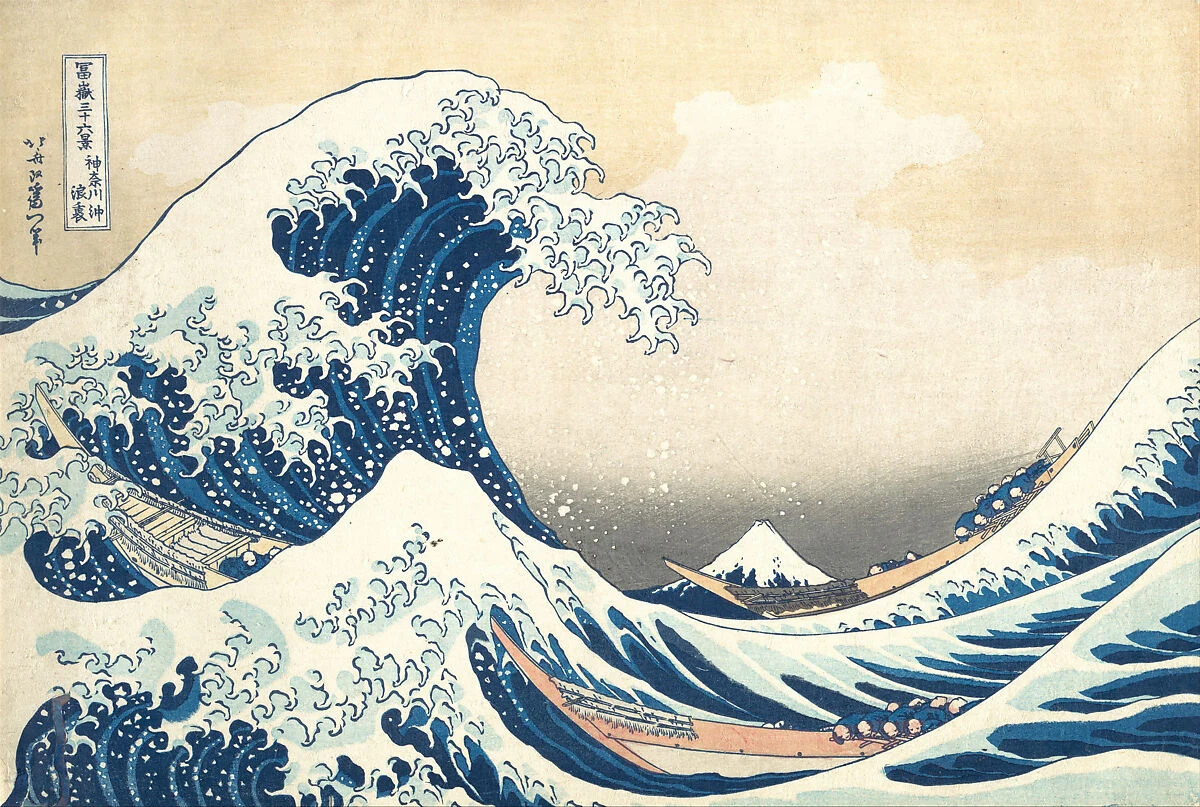
Hokusai’s Great Wave is a useful place to begin. Look at the enormous arc of water, the smaller boats, and Mount Fuji set deep in the picture. The Met identifies the print as a work from about 1830–32 and discusses its deliberate play with perspective.
Try reading the composition before the story: where does your eye enter, which shape holds your attention, and what detail makes you return? This small habit turns a familiar image into something worth looking at again.
Read the source: The Met — Hokusai, Under the Wave off Kanagawa ↗
A conversation with our figure scrolls
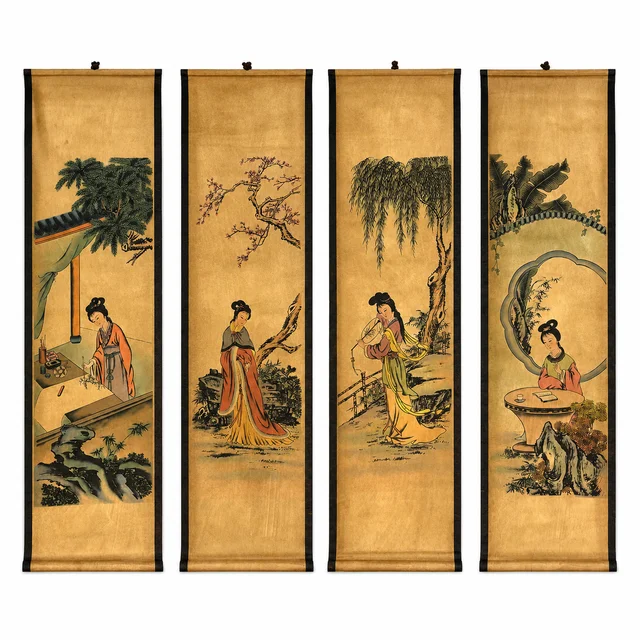
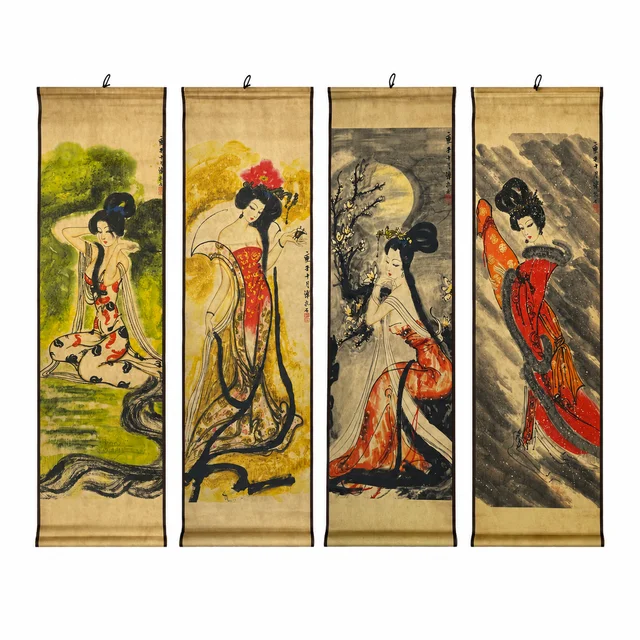
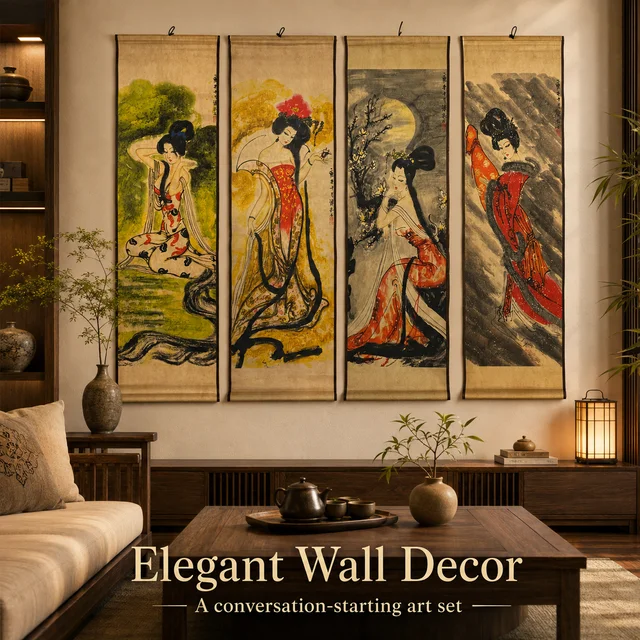
Our Four Legendary Beauties set (No. 16) can accompany this discussion through its expressive figures and vertical arrangement. Its subjects—Diao Chan, Wang Zhaojun, Xi Shi, and Yang Yuhuan—belong to Chinese traditions. It is not an ukiyo-e print, and we do not identify these women as Japanese geisha.
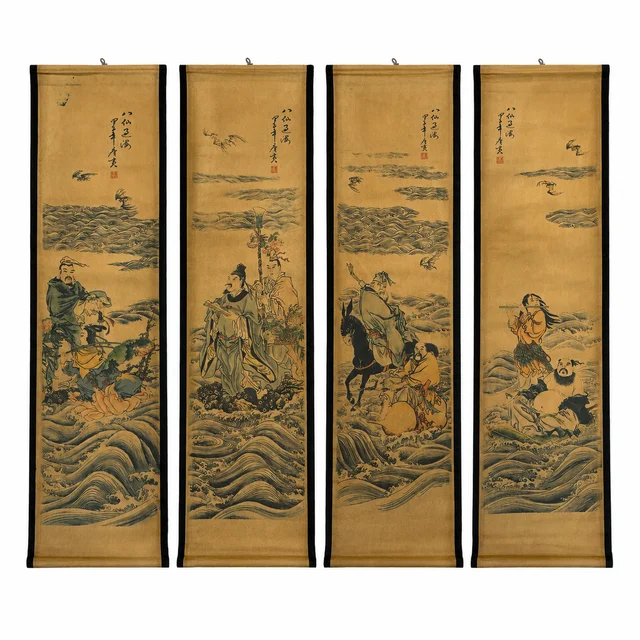
Likewise, Figures in the Garden (No. 14) invites you to compare posture, clothing, and the way a setting frames a person. The comparison is visual and educational; it does not establish a common artist, technique, or country of origin.
Bring the conversation home
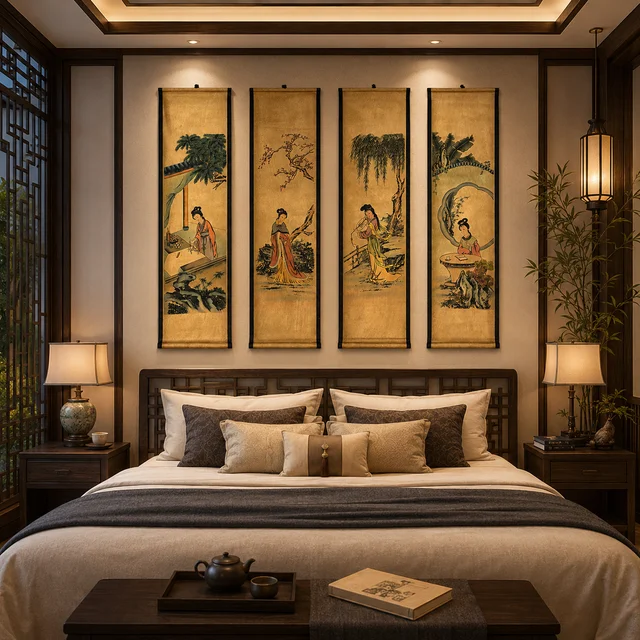
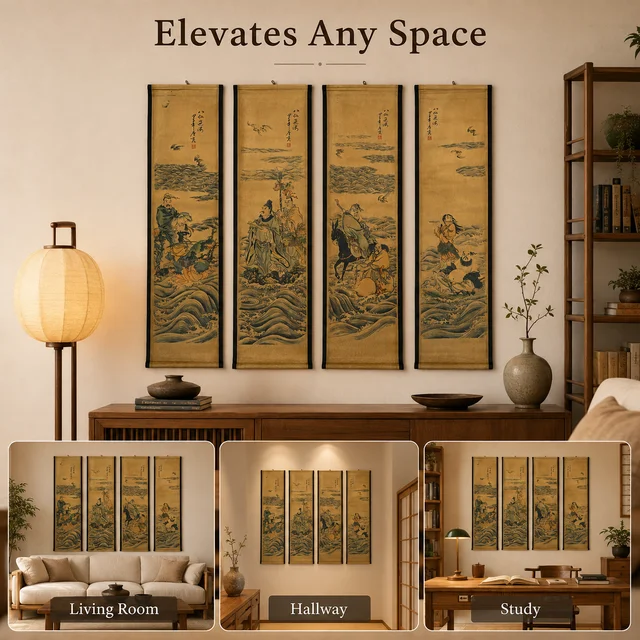
Give a figure set one uninterrupted wall and keep nearby accessories simple. Start with the entire four-panel composition, then move closer to one face or gesture. The set is $29.99 and each scroll is approximately 49 inches high, so measure the wall before choosing a position.
A Japanese-inspired room can include art from more than one culture. The most interesting arrangement lets those differences remain visible, while color, scale, and spacing bring the room together.